
Are you tired of the same old workout routine? Do you want to challenge your body and mind in new ways? Look no further than Pilates. This popular form of exercise focuses on controlled movements and breathing to strengthen and tone your muscles, improve your posture, and increase your flexibility.
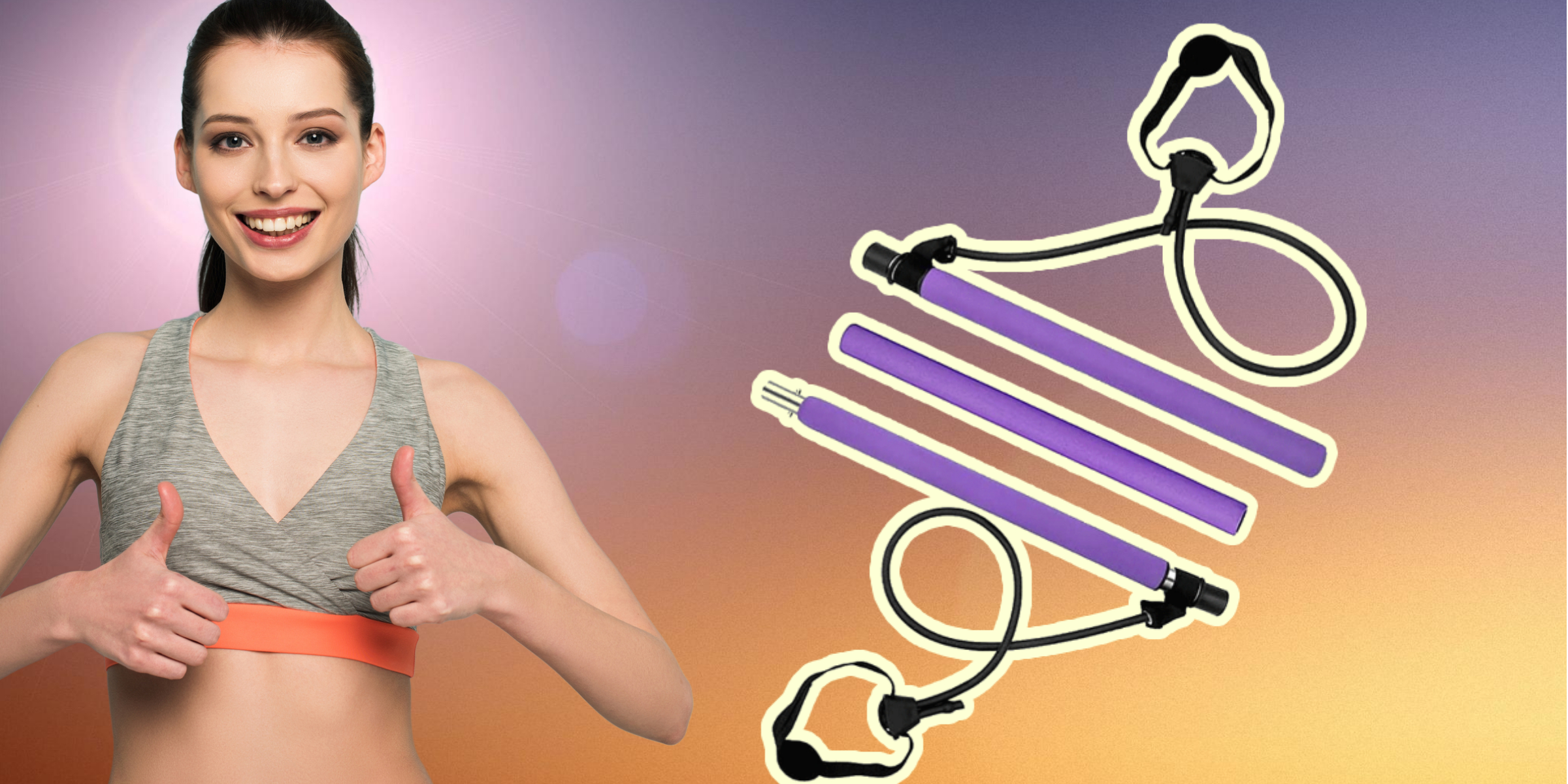
And if you want to take your Pilates practice to the next level, consider investing in a Pilates bar. A Pilates bar, also known as a Pilates stick or Pilates reformer, is a versatile piece of equipment that can be used for a variety of exercises. It allows you to add resistance to your Pilates workouts, making them more challenging and effective.
But with so many different types of Pilates bars on the market, how do you choose the right one for you? In this definitive Pilates bar buying guide, we’ll walk you through everything you need to know to find your perfect match for a personalized fitness experience.
Understanding the Benefits of Pilates Bars
If you’re looking for a way to enhance your Pilates routine, you’ll want to know all about the incredible benefits of using a Pilates bar! These bars are designed to add resistance and challenge to your exercises, making every move more effective and engaging.
By using a Pilates bar, you can improve your core strength, which is essential for maintaining good posture, balance, and stability. One of the primary benefits of using a Pilates bar is that it helps you improve your core strength. When you perform Pilates exercises with a bar, you engage your abdominal muscles, obliques, and lower back, which are all essential for maintaining a stable and strong core.
As you challenge your core muscles with the resistance of the bar, you’ll notice that your posture improves, and you’ll have an easier time performing other exercises. Another benefit of using a Pilates bar is that it allows you to target specific muscle groups more effectively. For example, if you’re looking to work your biceps, triceps, and shoulders, you can do so by using a Pilates bar for arm exercises.
You can also use the bar to target your glutes, hamstrings, and quadriceps during leg exercises, giving you a more comprehensive workout. Overall, using a Pilates bar can take your Pilates routine to the next level by providing more resistance and challenge to your exercises.
With improved core strength and the ability to target specific muscle groups, you’ll be able to achieve your fitness goals more efficiently and effectively. So, if you haven’t tried using a Pilates bar before, it’s time to give it a shot and experience the incredible benefits for yourself!
Different Types of Pilates Bars and Their Features
Discover the various kinds of Pilates bars available and how they can enhance your workout routine with their unique features.
There are three main types of Pilates bars: portable, fixed, and multipurpose. Portable bars are lightweight and easy to carry, making them great for those who travel frequently or have limited space at home.
Fixed bars are more stable and provide a more traditional Pilates experience. Multipurpose bars offer the best of both worlds, as they can be used as a portable or fixed bar depending on your needs.
When it comes to types comparison, portable bars are the most affordable, with prices ranging from $20 to $100. Fixed bars are typically more expensive, with prices ranging from $100 to $500. Multipurpose bars fall somewhere in the middle, with prices ranging from $50 to $300. However, it’s important to keep in mind that the price of a Pilates bar often correlates with its quality and durability.
When choosing a Pilates bar, it’s important to consider your personal preferences and fitness goals. Do you prioritize convenience and portability, or do you prefer a more stable and traditional experience? Are you willing to invest in a high-quality, durable bar that will last for years to come, or are you looking for a more budget-friendly option?
By considering these factors, you can find the perfect Pilates bar to enhance your workout routine and help you achieve your fitness goals.
Choosing the Right Size and Weight for Your Needs
To truly enhance your at-home workout routine, you’ll want to consider the right size and weight of pilates bar for your needs. When it comes to weight considerations, it’s important to choose a bar that is heavy enough to provide resistance and challenge your muscles, but not so heavy that it’s difficult to control. A good rule of thumb is to choose a bar that weighs between 1-3 pounds.
Size preferences are also important to consider when choosing a pilates bar. The length of the bar should accommodate your body size and allow you to perform exercises comfortably. A bar that is too short could limit your range of motion, while a bar that is too long could be difficult to control. As a general guideline, choose a bar that is at least the length of your arm span or slightly longer.
Another factor to consider in size is the diameter of the bar. A thicker bar can provide a more challenging grip and increase the intensity of your workout, while a thinner bar may be more comfortable for those with smaller hands. Ultimately, it’s important to choose a pilates bar that feels comfortable in your hands and allows you to perform exercises with proper form and control. Keep these weight considerations and size preferences in mind as you choose the perfect pilates bar for your personalized fitness experience.
| Weight Considerations | Size Preferences |
|---|---|
| Choose a bar that weighs between 1-3 pounds | Choose a bar that is at least the length of your arm span or slightly longer |
| Make sure the weight provides enough resistance to challenge your muscles | Consider the diameter of the bar for a comfortable grip |
| Avoid bars that are too heavy or difficult to control | Choose a bar that allows you to perform exercises with proper form and control |
Choosing the right size and weight of Pilates bar is crucial for a personalized fitness experience. Consider weight considerations and size preferences when selecting a bar that challenges your muscles without compromising control or comfort. With these factors in mind, you can confidently choose the perfect Pilates bar for your at-home workout routine.
Material and Durability Considerations
When it comes to enhancing your at-home workout routine, choosing a Pilates bar made from durable and sustainable materials is critical. You don’t want a bar that can’t withstand the wear and tear of your workouts, or one that harms the environment.
Look for bars made from materials like bamboo, which is both durable and eco-friendly. Cleaning and maintenance are also essential factors to consider when selecting a Pilates bar. You want a bar that is easy to clean and won’t require frequent maintenance.
Before making a purchase, check the manufacturer’s cleaning instructions to ensure that you have the necessary tools and products to keep your bar in tip-top shape. A well-maintained bar will last longer and provide you with a better workout experience. Lastly, consider the environmental impact of the materials used in your Pilates bar.
Look for bars made from sustainable and renewable materials that won’t harm the environment. A bar that is both durable and environmentally friendly not only benefits you but also the planet. By choosing a Pilates bar that is made with the environment in mind, you can feel good about your purchase and your impact on the world.
Comfort and Grip Features
Get ready to experience a more comfortable and secure Pilates workout with a bar that’s enhanced with grip and ergonomic features.
When it comes to comfort and grip, one of the most critical things to consider is the texture options. Some bars come with a smooth surface, while others have a ribbed or knurled texture that provides a better grip. Consider your personal preference and how sweaty your hands tend to get during a workout.
Another key aspect of comfort is foam padding. Some bars come with foam padding around the handles or even the entire length of the bar. This can help prevent blisters and calluses, as well as provide a more comfortable grip. Keep in mind that thicker padding may make the bar slightly bulkier and more difficult to maneuver, so it’s essential to find a balance between comfort and functionality.
In addition to comfort and grip, ease of assembly and portability are also important factors to consider. A bar that’s easy to assemble and disassemble will make it more convenient for you to take it with you on the go.
Look for a bar that can be broken down into smaller pieces and stored in a compact carrying case. This will make it easier for you to take your Pilates workout with you wherever you go, whether you’re traveling or simply moving between different rooms in your home.
Adjustability and Versatility of Pilates Bars
You’ll be amazed at the versatility of Pilates bars! They can help you create customized routines that target different muscle groups and achieve your fitness goals. Whether you’re a beginner or an experienced Pilates practitioner, these bars offer multiple functionalities that can enhance your workout experience and help you achieve better results.
One of the primary benefits of Pilates bars is their adjustability. This allows you to modify the resistance level according to your fitness level and progress. By simply adding or removing resistance bands, you can make your workout more challenging or easier, depending on your needs. This feature is particularly useful for individuals who are recovering from an injury or looking to build strength gradually.
Moreover, Pilates bars offer a range of exercises that you can perform to target different muscle groups, including your arms, legs, core, and back. From lunges and squats to overhead presses and lateral raises, you can create a full-body workout that challenges your muscles and improves your overall fitness.
With the multi-functionality of Pilates bars, you can get the benefits of a full gym workout without leaving the comfort of your home.
Compatibility with Other Pilates Equipment
If you’re looking to spice up your Pilates routine, consider adding other equipment to your Pilates bar workouts, as they’re compatible with a variety of other Pilates equipment. When considering compatibility concerns, it’s important to note that Pilates bars can be integrated into Pilates studios with a wide range of other equipment.
This means that you can easily incorporate Pilates bars into your existing Pilates routine without having to overhaul your entire workout. One of the main benefits of using Pilates bars in conjunction with other equipment is that they allow for greater versatility and customization in your workouts.
For example, you can easily attach resistance bands to your Pilates bar to add additional resistance to your exercises. Additionally, Pilates bars can be used in conjunction with Pilates balls, foam rollers, and other equipment to create a more well-rounded workout.
Another benefit of using Pilates bars in conjunction with other equipment is that it can help to target specific muscle groups more effectively. For example, if you’re looking to target your core muscles, you can use a Pilates bar in conjunction with a Pilates ball to perform exercises that specifically target your abdominal muscles.
Similarly, if you’re looking to work on your upper body strength, you can use a Pilates bar in conjunction with resistance bands to perform exercises that target your chest, shoulders, and arms. Overall, if you’re looking to take your Pilates workouts to the next level, it’s worth considering the compatibility of Pilates bars with other Pilates equipment.
By doing so, you can create a more customized and effective workout that targets specific muscle groups and helps you achieve your fitness goals.
Reviews and Recommendations from Users and Experts
Now that you’ve got an idea of how your Pilates bar will fit in with your other equipment, it’s time to look at reviews and recommendations from users and experts.
This will help you make an informed decision about which bar is right for you. When reading reviews, pay attention to how users describe the bar’s performance.
Does it provide enough resistance? Is it durable? Does it feel comfortable to use? These are all important factors to consider when choosing a Pilates bar.
Another important consideration is price. Comparing prices among different bars can help you make the most of your budget. However, don’t let price be the only determining factor.
Evaluating performance is equally important when making a choice. By taking these factors into account, you’ll be able to find the perfect Pilates bar for your personalized fitness experience.
Setting Up and Using Your Pilates Bar Safely and Effectively
Before setting up and using your Pilates bar, make sure you have enough space to move safely. You need room to extend your arms and legs without hitting anything. Also, check that the floor is non-slip and stable.
To use the Pilates bar safely, grip it correctly with your hands shoulder-width apart and fingers wrapped around the bar. Keep your shoulders down, engage your core, and maintain a neutral spine. Remember to breathe steadily throughout your workout.
Warm-up techniques are crucial to prevent injuries. Start with gentle stretches to loosen up your muscles, then gradually increase the intensity with basic exercises. Listen to your body and adjust the workout as needed to minimize the risk of injury.
- Ensure enough space for free movement
- Proper grip and form for effective workout
- Maintain a steady breathing pattern
- Warm-up techniques to prevent injury
Tips for Maximizing Your Pilates Bar Workouts
To get the most out of your Pilates bar workouts, you must focus on maximizing your form and technique. This means taking the time to properly align your body, engage your core, and move with control and precision. By doing so, you’ll not only increase the effectiveness of your workouts but also reduce your risk of injury.
One way to maximize your form is to customize the resistance of your Pilates bar. Most bars come with multiple resistance levels, allowing you to choose the level that best suits your fitness level and goals. As you progress, you can gradually increase the resistance to continue challenging your body and seeing results.
Another tip for maximizing your Pilates bar workouts is to vary your exercises and routines. Don’t always do the same exercises in the same order, as your body will quickly adapt and stop responding. Instead, mix things up by trying new exercises or sequences, or incorporating other equipment like resistance bands or balls. This will keep your body guessing and help you avoid plateaus.
Conclusion
Congratulations! You’ve now made a well-informed decision on choosing the perfect Pilates bar for your personalized fitness experience.
Remember, Pilates bars offer a variety of benefits, including improved flexibility, strength, and overall body tone. So, it’s important to select one that meets your specific needs and preferences.
When choosing a Pilates bar, consider the type, size, weight, material, comfort, and compatibility with other equipment. It’s also helpful to read reviews and recommendations from other users and experts in the field.
Once you’ve selected your Pilates bar, make sure to set it up and use it safely and effectively. And don’t forget to maximize your workouts with a few tips and tricks.
By using this definitive Pilates bar buying guide, you can now confidently select the perfect Pilates bar for your fitness journey. Get ready to enhance your workouts and achieve your fitness goals with your new Pilates bar.
Happy exercising!
